The global economic impact of disinformation
Disinformation has become a major economic threat, impacting growth, markets and business performance. It acts as a global “tax on trust”.
a first: quantifying the invisible
The paradox: At the start of 2024, the World Economic Forum ranked the phenomenon as a “major global risk” for the second conse cutive year. Governments treat it as a priority. Companies allocate growing budgets to tackle it. Citizens no longer know whom to trust.
And yet, no rigorous accounting exists to measure the scale of this economic haemorrhage.
key takeways
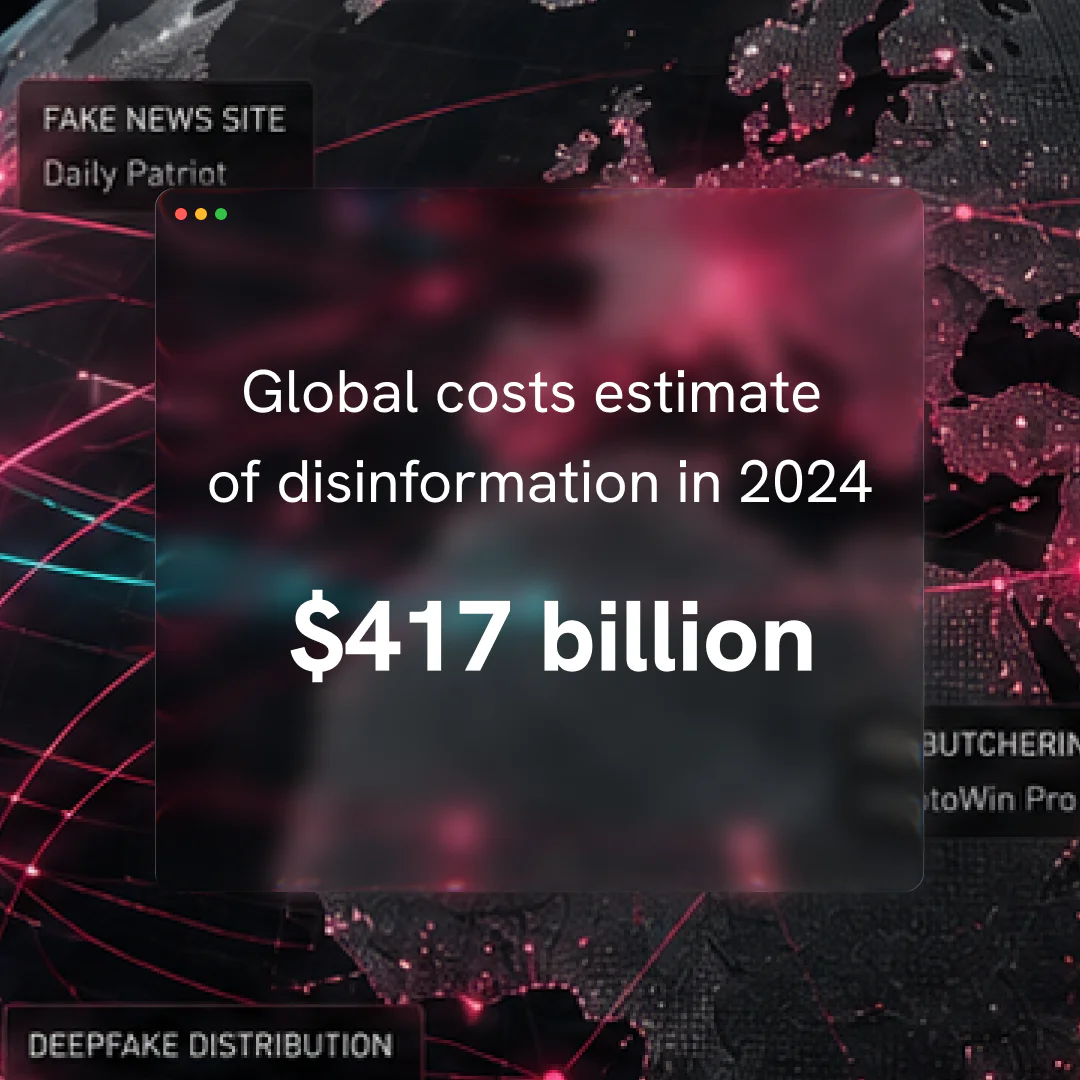
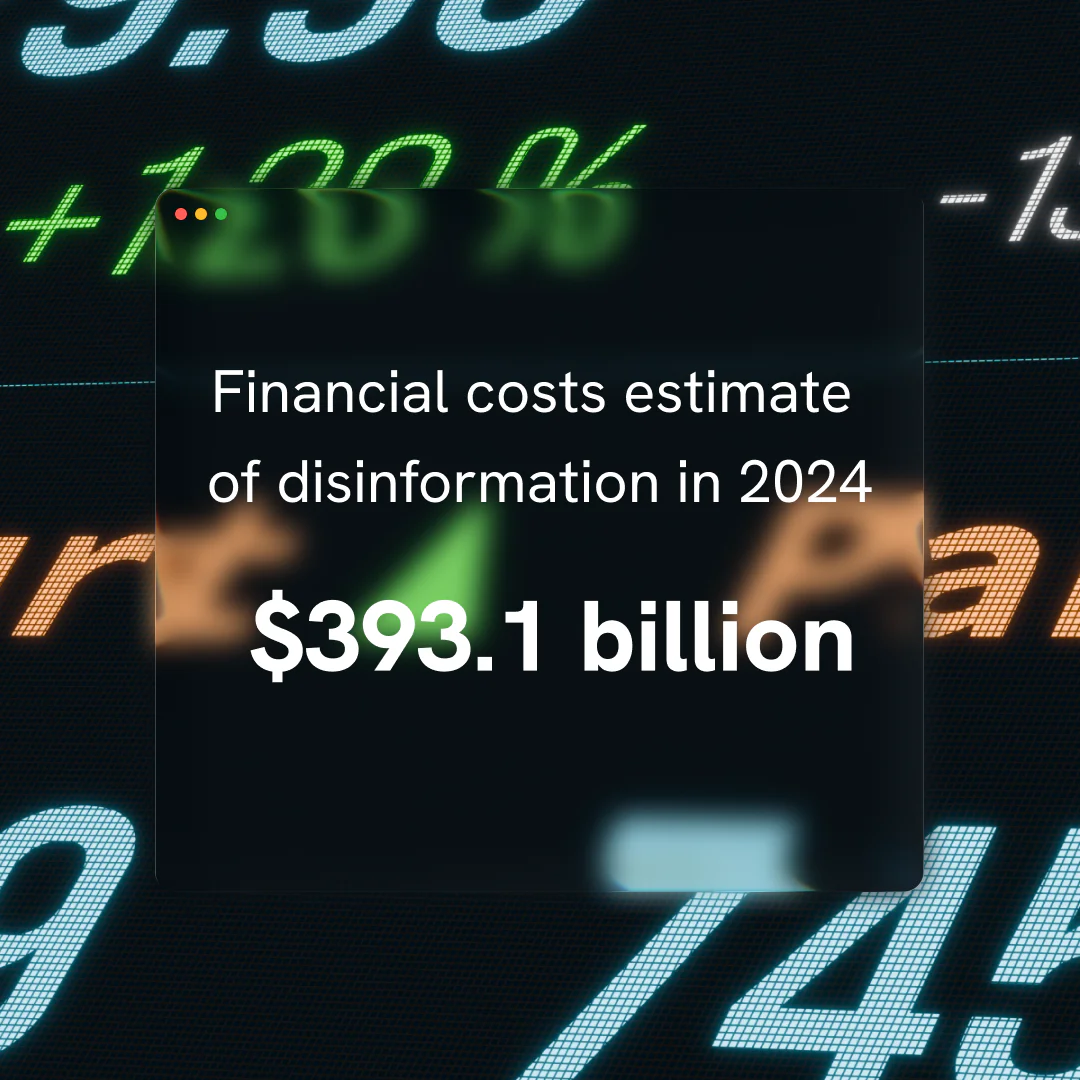
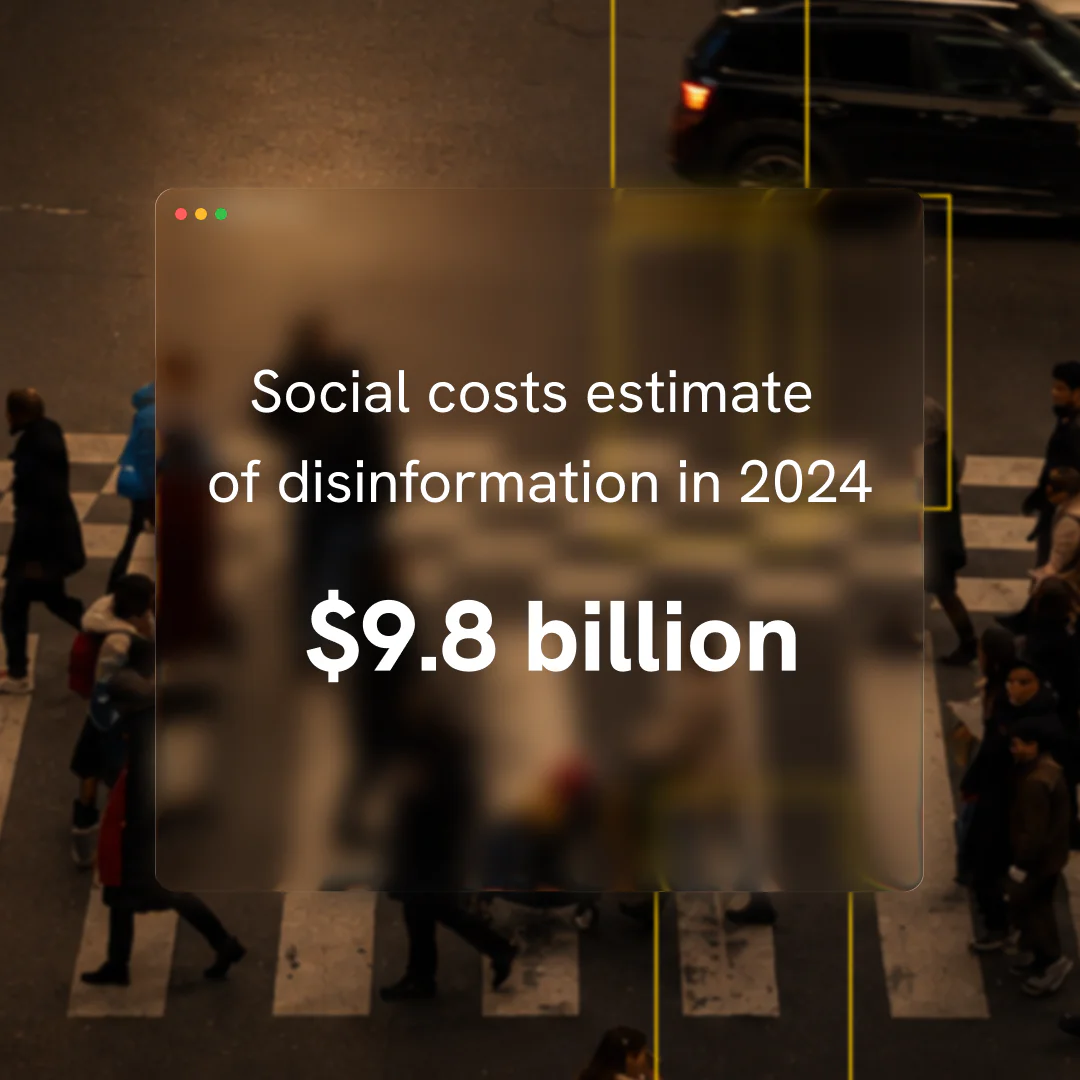
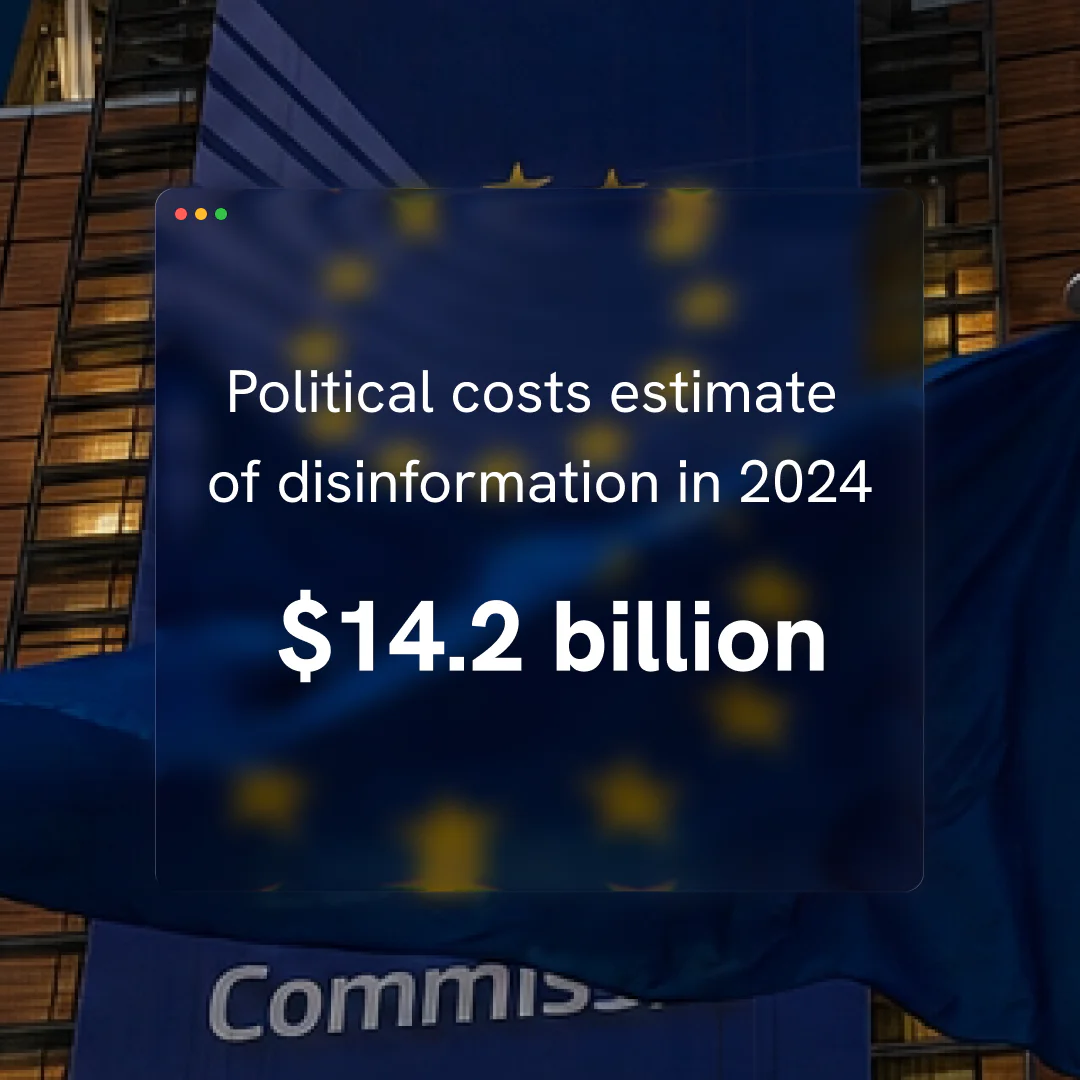
$417 billion* equivalent to approximately 15% of France's GDP in 2024 *Median scenario. Low scenario: USD 355.6 billion High scenario: USD 516.4 billion
Why this study comes at the right time
COVID-19 triggered an unprecedented “infodemic” in which reliable information became a matter of life or death.
Generative AI has industrialised the creation of misleading content at massive scale.
Hybrid warfare is intensifying: information manipulation has become a central strategic tool in confrontations between states.
2024, a record year with 4 billion people voting worldwide, saw information integrity directly threaten democratic processes themselves.
beyond the figures: a shift paradigm
Integrate informational risk into risk matrices on a par with cyber or climate risk.

Scientific oversight
Work conducted under the aegis of a scientific committee including Clément Bénesse (mathematician), Tiziana Assenza (economist), and Cyril Rollinde (econometrician)